
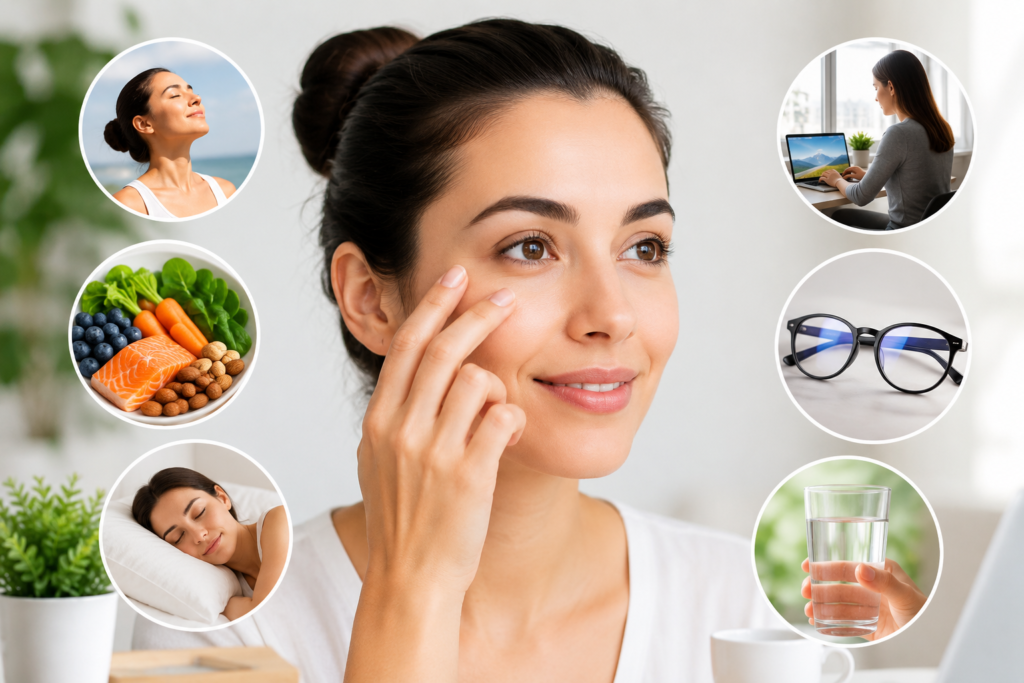
Our eyes work continuously throughout the day, helping us read, drive, work, communicate, and enjoy the world around us. Despite their importance, eye health is often taken for granted until problems begin to appear. The good news is that maintaining healthy eyes doesn’t require complicated treatments or major lifestyle changes. Simple daily habits can go a long way in protecting your vision and reducing the risk of eye diseases.
By taking care of your eyes today, you can enjoy clear and comfortable vision for many years to come.
Eat a Balanced Diet for Better Eye Health
A nutritious diet plays a vital role in maintaining healthy eyesight. Certain vitamins and minerals help protect the eyes from age-related damage and support overall visual function.
Foods That Support Eye Health
Include these nutrients in your daily diet:
- Vitamin A: Carrots, sweet potatoes, spinach, and mangoes
- Vitamin C: Oranges, lemons, strawberries, and guavas
- Vitamin E: Almonds, sunflower seeds, and peanuts
- Omega-3 Fatty Acids: Fish, walnuts, and flaxseeds
- Lutein and Zeaxanthin: Kale, spinach, broccoli, and leafy greens
A healthy diet can help reduce the risk of cataracts, macular degeneration, and other vision-related conditions.
Protect Your Eyes from Harmful UV Rays
Just as your skin needs protection from the sun, your eyes do too. Long-term exposure to ultraviolet (UV) rays can increase the risk of cataracts and other eye problems.
Tips for UV Protection
- Wear sunglasses with 100% UVA and UVB protection.
- Use a wide-brimmed hat when outdoors.
- Avoid looking directly at the sun.
- Wear protective eyewear during outdoor activities.
Quality sunglasses not only improve comfort but also help preserve long-term eye health.
Follow the 20-20-20 Rule
In today’s digital world, many people spend several hours each day looking at screens. Excessive screen time can lead to digital eye strain.
The 20-20-20 Rule
Every 20 minutes:
- Look at something 20 feet away
- For at least 20 seconds
This simple habit helps relax your eye muscles and reduces fatigue caused by prolonged screen use.
Limit Excessive Screen Time
Computers, smartphones, tablets, and televisions can place significant strain on your eyes.
Symptoms of Digital Eye Strain
- Dry eyes
- Headaches
- Blurred vision
- Eye fatigue
- Neck and shoulder pain
Ways to Reduce Eye Strain
- Adjust screen brightness.
- Increase text size if needed.
- Maintain proper viewing distance.
- Blink frequently to keep eyes moist.
- Take regular breaks during screen use.
These small adjustments can significantly improve comfort and productivity.
Stay Hydrated
Water is essential for overall health, including eye health. Dehydration can reduce tear production and contribute to dry, irritated eyes.
Try to drink adequate water throughout the day to keep your eyes properly hydrated and comfortable.
Get Enough Sleep
Sleep allows your eyes to rest and recover from daily strain.
Lack of sleep may cause:
- Red eyes
- Eye twitching
- Dryness
- Blurred vision
- Increased sensitivity to light
Most adults should aim for 7–9 hours of quality sleep each night to support healthy eyes and overall well-being.
Avoid Smoking
Smoking can have serious effects on eye health. It increases the risk of:
- Cataracts
- Macular degeneration
- Optic nerve damage
- Dry eye syndrome
Quitting smoking can significantly reduce these risks and improve long-term eye health.
Wear Protective Eyewear When Necessary
Eye injuries can occur during sports, home repairs, gardening, construction work, or other activities.
Use appropriate safety glasses or protective eyewear whenever there is a risk of eye injury.
Prevention is often the best protection against vision loss caused by accidents.
Keep Contact Lenses Clean
If you wear contact lenses, proper hygiene is essential.
Contact Lens Safety Tips
- Wash your hands before handling lenses.
- Clean lenses according to instructions.
- Replace lenses as recommended.
- Never sleep in lenses unless approved by your doctor.
- Replace lens cases regularly.
Good lens hygiene helps prevent infections and keeps your eyes healthy.
Schedule Regular Eye Examinations
One of the most important steps in maintaining healthy eyes is having regular eye checkups.
Eye examinations can help detect:
- Vision changes
- Glaucoma
- Cataracts
- Diabetic eye disease
- Other eye conditions
Many eye diseases develop without noticeable symptoms, making routine examinations essential for early detection and treatment.
How Often Should You Get an Eye Exam?
- Children: As recommended by an eye care professional
- Adults: Every 1–2 years
- Seniors: Annually or as advised
- People with diabetes: More frequent examinations may be needed
Know the Warning Signs
Seek professional eye care if you experience:
- Sudden vision loss
- Persistent headaches
- Eye pain
- Flashes of light
- Double vision
- Redness that does not improve
- Difficulty seeing at night
Prompt treatment can help prevent serious complications.
Conclusion
Maintaining healthy eyes every day doesn’t have to be difficult. Eating nutritious foods, protecting your eyes from UV rays, limiting screen time, staying hydrated, getting enough sleep, and scheduling regular eye exams are simple yet effective ways to preserve your vision.
Your eyesight is invaluable, and taking preventive measures today can help ensure clear, comfortable vision for years to come. At Daulat Optical, we are committed to helping you achieve and maintain excellent eye health through professional eye examinations, quality eyewear, and expert eye care guidance. Schedule your eye checkup today and take the first step toward healthier vision.